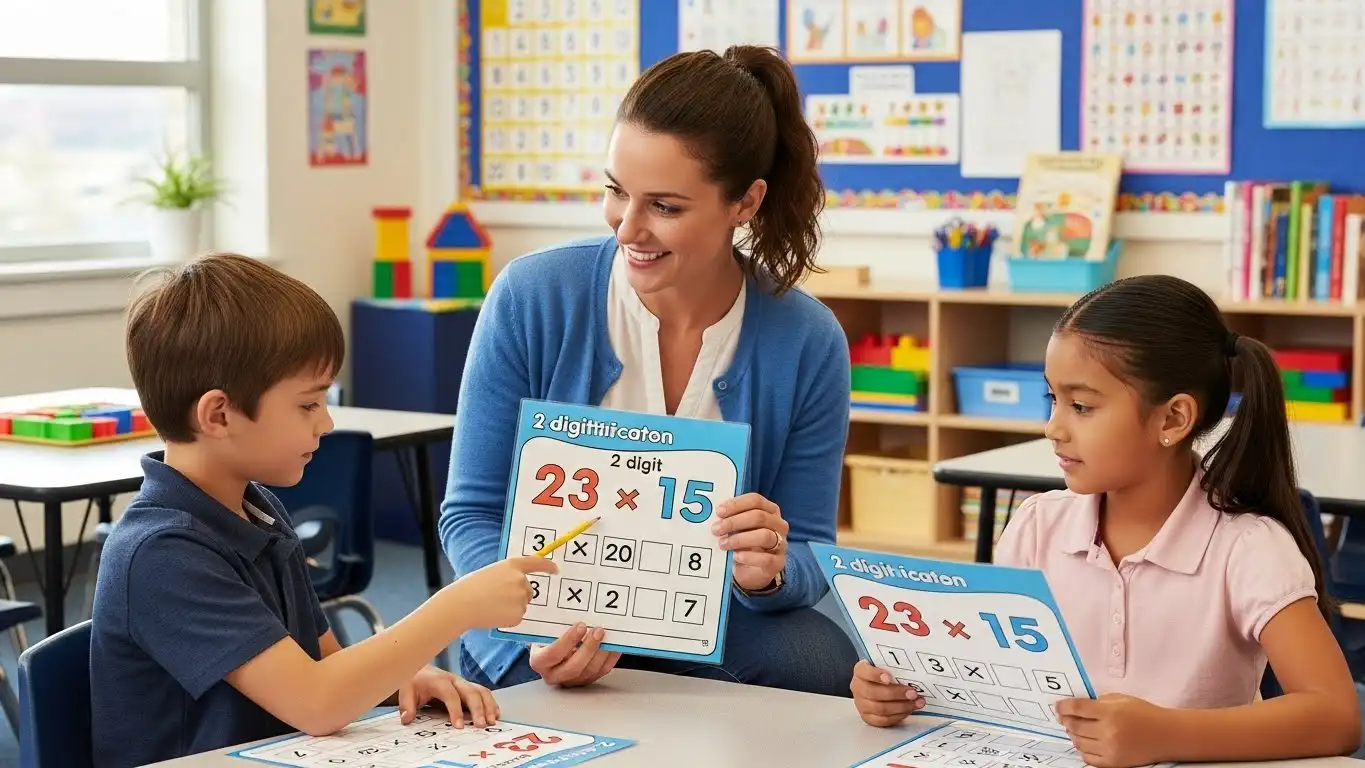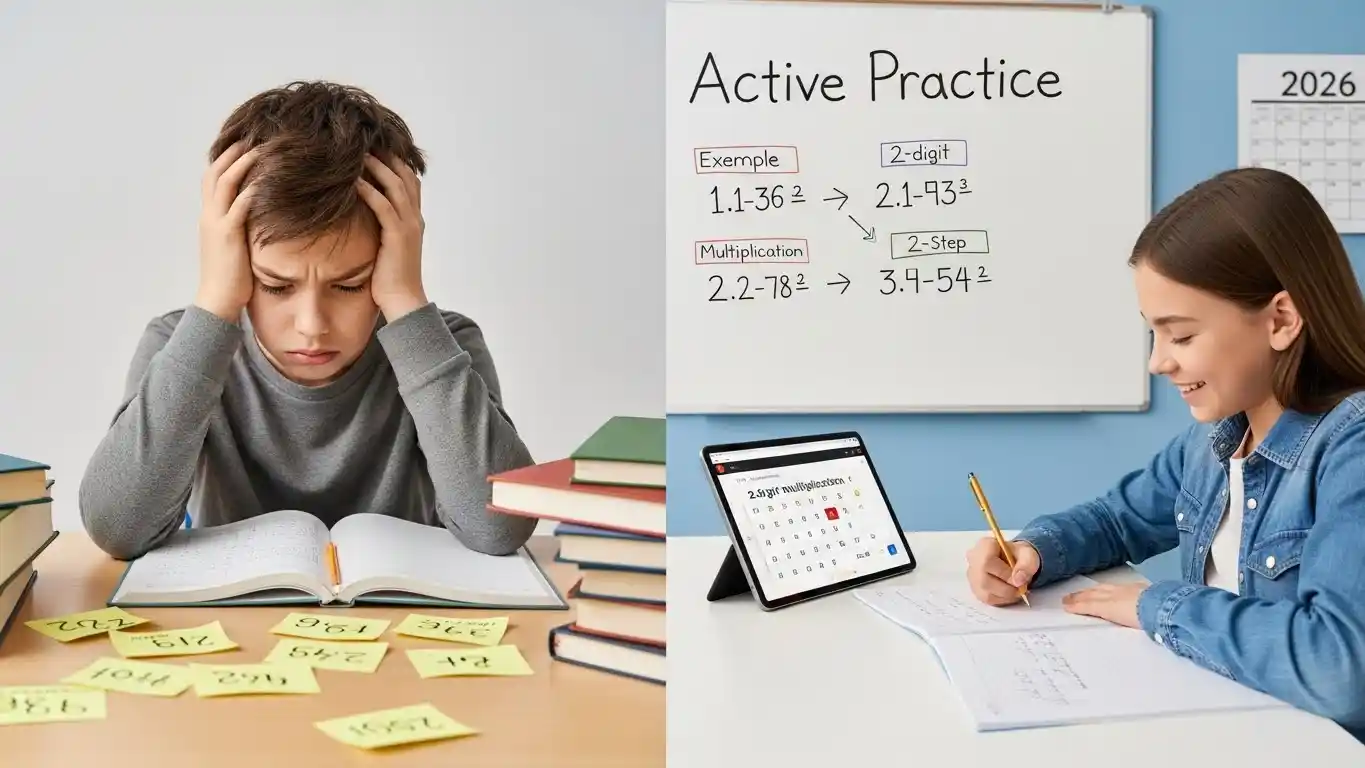
"We have all been there. You are sitting at the kitchen table, holding up a flashcard that says 34 × 12, and your child stares back blankly. The tears start falling, and 'math time' becomes a battleground."
Hello, parents and teachers! I am Ronit Shill, the founder of ToolsBomb.
When I built this platform, I didn't just want to create calculators. I wanted to solve a problem I see every day in education: The Memorization Trap.
In 2026, we have more educational apps than ever before. Yet, many students still struggle with basic multi-digit multiplication. Why? Because we are using old tools (flashcards) for complex problems.
Today, I want to share why Active Practice is the superior method for teaching math, and how you can use free tools to help your child master it without the tears.
Why Rote Memorization Fails
Rote memorization is the process of repeating information until it sticks. It works great for simple facts, like knowing that the capital of France is Paris, or that 7 × 8 is 56.
However, 2-digit multiplication is not a "fact." It is a process (an algorithm).
When you ask a child to memorize the answer to 24 × 15, you are asking them to memorize a random number (360). There is no logic to hold onto. If they forget the number, they are stuck. They have no way to "figure it out."
- Cognitive Overload: There are thousands of combinations of 2-digit numbers. Memorizing them all is impossible.
- Zero Understanding: Memorizing the answer doesn't teach place value or regrouping.
- High Anxiety: The pressure to "just know" the answer creates fear of failure.
Enter "Active Practice"
Active Practice is different. It shifts the focus from "recalling" to "doing."
When a student actively solves a multiplication problem using a worksheet or a digital tool, they are engaging multiple parts of their brain.
- Visual Processing: They align the numbers vertically, ensuring the ones and tens places match.
- Logical Sequencing: They follow the steps: "First I multiply the ones, then I carry the tens..."
- Verification: They can check their work.
This repetition builds muscle memory. Just like learning to ride a bike, they aren't memorizing "how" to balance; they are physically doing it until it becomes natural.
Try Active Practice Now
Don't just read about it. Generate a free, unlimited practice worksheet tailored for 2-digit multiplication right now. No signup required.
Generate WorksheetThe "ToolsBomb" Method for Success
As a developer and an educator at heart, I built ToolsBomb to support this active learning style. Here is a simple routine I recommend for parents and teachers in 2026:
Step 1: Visual Breakdown
Start with visual aids. Use the "Box Method" (Area Model). Instead of abstract numbers, draw a box split into sections. For 12 × 14, split it into 10+2 and 10+4. This makes the math "real" and visible.
Step 2: Low-Stakes Consistency
You don't need 3-hour study sessions. That leads to burnout.
Consistency beats intensity. Use our generator to print just one worksheet (10 problems) per day. It takes 15 minutes. In a week, your child will have solved 70 problems actively. That is far better than staring at flashcards for an hour on Sunday.
Step 3: Instant Feedback
This is where digital tools shine. After solving the problems on paper, let your child use the 2-digit-multiplication Ulimited Worksheet generator to check their own answers.
If they get it wrong, don't scold them. Ask, "Where did the process break?" Did they forget to carry a number? Did they add incorrectly at the end? Finding the bug in the process is a valuable skill for math (and coding!).
Final Thoughts: Empowering the Student
The goal of education isn't to create human calculators. We have phones for that.
The goal is to build confidence. When a student relies on rote memorization, they are always afraid of forgetting. When they rely on Active Practice, they know they have the skills to solve any problem you put in front of them.
That is true mastery.
Let's ditch the flashcards this year and pick up the pencil.
Ronit Shill
Founder, ToolsBomb